
Australian Human Microbiome Biobank
Information for Donors
By supporting the Australian Human Microbiome Biobank, you are helping to build a scientific resource that could transform how we understand and treat disease. Here's everything you need to know about donating a sample to AHMB.
Why it matters
What is the purpose of AHMB?
The community of microorganisms living in and on the human body – known as the human microbiome – plays an important role in our health and wellbeing. These microorganisms produce compounds that can influence your metabolism, immune system and even mental health, among other functions. However, we are unable to grow most of these microorganisms in the laboratory, making it difficult to study the diverse ways they affect human health.
The purpose of this study is to create a collection of microorganisms from the human body, called the Australian Human Microbiome Biobank, so that researchers can study them in the laboratory to get a better understanding of how they influence health and disease. This knowledge may help researchers develop new ways to improve our health and wellbeing or to diagnose and treat a range of human diseases.
Support health research
Your donation could support scientific research into the links between microorganisms and human health, from gut disorders to skin and immune conditions.
Enable future discoveries
Isolates from your sample could be used by researchers for years or even decades to come, making your contribution a lasting investment in scientific progress.
Benefit all Australians
AHMB is built to serve the Australian research community and beyond. Your donation helps ensure Australian scientists have the resources they need to advance microbiome research that benefits everyone.
The Process
What happens to your donation?
Once you donate a sample to AHMB, here is what happens from the moment it arrives at our laboratory through to when the isolates become available for research.
Your sample is collected at our facility
Samples are collected onsite at the Translational Research Institute in Brisbane, where our laboratory is located. The collection process is simple and non invasive for most sample types, and our team will guide you through what is involved before you decide to donate.
We separate and grow individual microbes
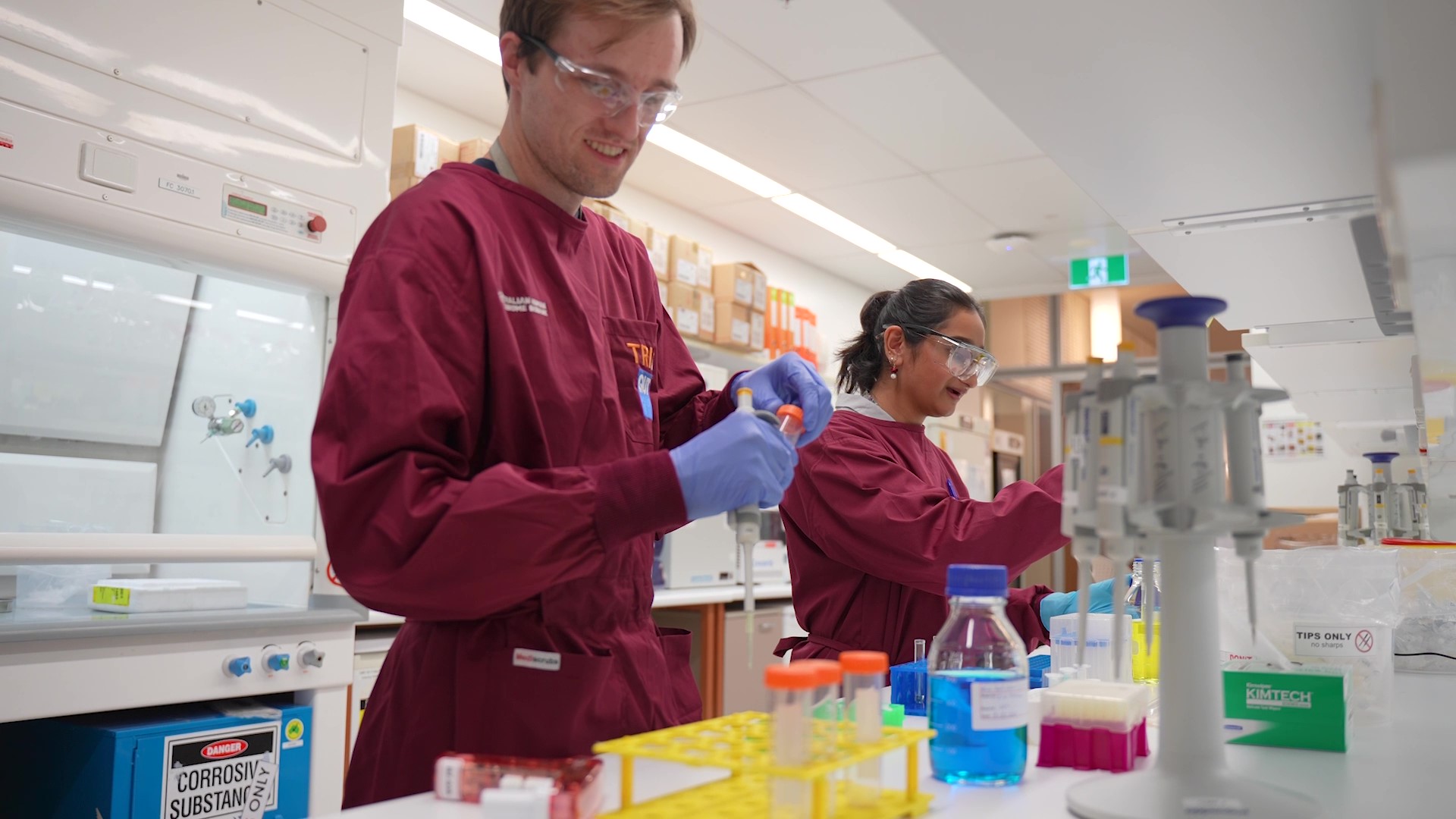
Our scientists separate individual microbes from the community of microorganisms in your sample and grow them on their own. Each microbe we successfully grow becomes what we call an isolate. These isolates (not the original sample) form the basis of our collection.
Many of the bacteria we work with, particularly those from the gut, can only survive in oxygen free environments. Our purpose built laboratory allows us to recover a much wider variety of microbes than most laboratories.
We identify each individual microbe
Each isolate is carefully identified using whole genome sequencing. You can think of this like a genetic fingerprint that tells us what the microbe is, how it is related to others and what makes it unique. This information is recorded and stored alongside each isolate.
We check the quality of every isolate
Before any isolate is added to our collection, it goes through a thorough quality check to confirm it is correctly identified, viable and meets our strict standards. Only isolates that pass every check are included in the collection.
We store each isolate safely for the future
Isolates that pass our quality checks are carefully frozen and stored in our secure biobanking facility. Multiple copies of each isolate are maintained so that scientists can access them repeatedly without the risk of the collection being depleted.
Scientists put the isolates to work
Approved researchers from Australia and around the world can request access to individual isolates from our collection to use in their research. The original donated sample is never shared. Researchers work only with the isolated microbes, studying how they affect health, developing new treatments and advancing our understanding of the human microbiome.
What we collect
Sample types accepted by AHMB
AHMB accepts samples from four sites on the human body. Each sample type provides a unique window into a different microbial community. We have put together step-by-step guides for each sample type to help you understand what the collection process involves.
Your privacy
We never store your DNA
We never store human tissue or DNA, only microorganisms. Your personal details are kept completely private and are never shared with researchers. Anyone accessing isolates from our collection has no way of identifying who donated them.
Your sample is given a unique reference number so it can be tracked through our process, but your identity is removed before any scientific work begins and stored securely at QUT in accordance with Australian privacy law.
"No researcher who accesses the individual isolates from your donated sample will ever know who you are."
Ethics & your rights
Our commitment to you
Donor trust is fundamental to everything we do at AHMB. We are deeply committed to the ethical, transparent and respectful handling of every sample we receive and we want every donor to feel fully informed and confident in that commitment.
Your privacy is protected. All samples are de-identified before entering the collection. No researcher who accesses your donated microbes will ever be able to identify you. Your information is stored securely at QUT in accordance with Australian privacy law.
You are always in control. Participation is entirely voluntary and you can withdraw your consent at any time. We will never use your sample for any purpose beyond what you have agreed to.
Full transparency. We provide clear, plain language information about exactly how your sample will be used, who can access it and what your rights are before, during and after your involvement.
Common Questions
Questions people often ask about donating
Your sample is collected onsite at our facility at the Translational Research Institute in Brisbane and processed in our laboratory. Our team separates individual microbes, grows them, identifies each one, checks their quality and stores them as individual isolates. Your personal details are removed and replaced with a reference code before any scientific work begins. Only the isolated microbes are made available to approved researchers. The original sample is not shared.
This biobank is not anticipated to provide you with any direct or immediate benefit. However, you will be able to feel like you have contributed to advancing our understanding of the way the microbiome influences human health. We are very grateful for your time and interest in participating and would be happy to share future research that may come out of this project with you. Please let us know if you would like to find out more about the research that is being undertaken.
If you decide to withdraw your consent from this research project, please notify a member of the research team. You can withdraw from the research project at any time without penalty and any unused samples will be destroyed. However, you should be aware that microorganisms collected from your sample(s) and associated data up to the time you withdraw will form part of the biobank. If you do not want them to do this, you must tell the research team before you join the research project.
Your original sample is never shared with researchers and never leaves AHMB. When your sample arrives at our laboratory, we separate out the individual microorganisms it contains and grow each one on its own. Each of these individually grown microorganisms is called an isolate. It is only these isolates, not your original sample, that approved researchers can request.
For most sample types, the collection process is simple and non invasive. Samples are collected onsite at our facility and our team will guide you through what is involved before you decide to donate. You can ask questions at any time and are never obliged to proceed.
No, never. AHMB does not collect, store or test human DNA in any form. We are only interested in the bacteria and other microorganisms that live in and on your body. When we analyse the genetic information of the microbes in our collection, we are reading the DNA of the microbe. No human tissue of any kind is stored at AHMB.
Interested in donating?
Register your interest and our team will be in touch when we are accepting donations. Your contribution could help shape the future of microbiome research in Australia.